It’s time to figure out what to do with the painting,
I sigh as I tug the rolled canvas out it from its cobweb home in the corner of the garage. How long has it even been here? Three years? More? Since he bought this house? Since I called it mine?
Tears sting the corners of my eyes. But dad will be here soon and I rented this dumpster to throw things away…
I take the kitchen scissors in my hand and unroll my “masterpiece” onto the driveway, warmed by the morning sun.
Standing over it my mind drifts back to years past. The laughs and comments of those who stood around as I balanced myself on the catwalk constructed just for its creation. I remember every brush flick, every layer. The long conversations about what to do with it. I always assumed it would go somewhere. A library? A museum?
But now it’s come to this.
I take one last look over my shoulder towards the front door. I can see him standing in the kitchen, watching me through the window. Almost like he wants to stop me. But he doesn’t.
Our relationship is over. It’s gone up in flames. Life as I know it, has ended.
So I do the unthinkable.
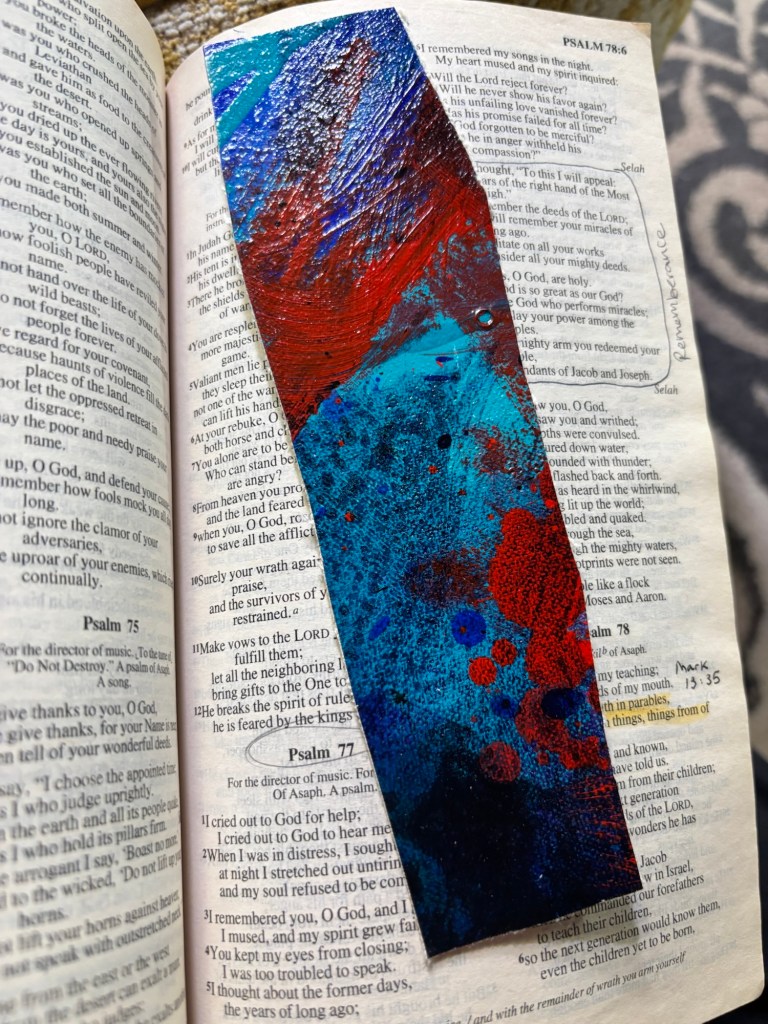
I cut up my painting and I throw its remains into the dumpster. Tears rolling down my face.
And he just watches.
***************************************
Six years ago I wish someone had told me that rock bottom had a basement…
And six months ago I wish someone had told me that forgiveness is a process and that it doesn’t happen all at once…
I really, honestly, thought that just because I didn’t think about it anymore meant that I had forgiven it. But the Lord has been delicately lifting things back to the surface that have stuffed down in order to teach me about my un-forgiveness.
Forgiveness is so hard. And just when you think you’ve mastered its art you are confronted by the fact that you don’t even know where to begin.
I carry a belief, or old wound, that tells me that I cannot risk doing something wrong because that threatens love. And if I were to ever admit to doing wrong, will someone stay or will they leave me because they’ve seen a side of me that they can’t forgive?
And for some of us, this is a wound that started in early childhood. In our families of origin conflict meant that someone was going to get angry and someone was going to leave.
This is problematic because you have to have conflict in relationships in order to invite honesty and vulnerability. Not to fight. Some of the most secure relationship are those where the individuals learned to fight well, not because they enjoyed fighting but because conflict meant working through something that leads to deeper intimacy.
But that is something that needs to be modeled for an individual early in life. To see conflict in a healthy way. Because if you are someone whose family experienced this in a very unhealthy, destructive way, you aren’t going to be open to going deeper with someone, regardless of how different their experience has been. Conflict, for them, is a reason to hide.
Secure attachment teaches three things:
That I am loved even when I’m not perfect. Disagreement doesn’t equal danger. And I’m allowed to rest in this relationship.
Being able to rest inside a relationship where you know that no matter the conflict you’re not going to loose your identity is so life-bringing. And I think sometimes my fear when the hurt resurfaces and I am faced with forgiveness, the question becomes, am I going to loose my identity? Am I going to have to placate, or fawn, or make sure they are ok, and my own heart isn’t going to be noticed…
Because some of us also never experienced healthy repair of a relationship. Some grew up in a family where conflict led to anger and to blow ups and to someone leaving with no effort to repair by saying “sorry” or taking accountability. There are people who’s real fear is that when something breaks it no long has the ability to be repaired. And this greatly impacts our view of forgiveness.
Both for ourself but also for others.
True forgiveness is not loosing our identity it’s actually an affirmation of who we are in Christ because there is a transformative redemptive suffering that occurs. It becomes the cross. If we are truly striving for discipleship then that means a complete transformation of our lives; to pick up our own crosses and to follow him. The suffering is not lost, the pain is not lost. Out of it comes beauty and intercession for ourselves and others.
But forgives is not reconciliation. The beauty of this is that we can forgive anyone. But reconciliation requires two parties to come together and commit to repairing the damage that was done by taking accountability and having a willingness to change. But not everybody is capable of doing that.
When I reconnected with the boy I dated in college I thought forgiveness meant letting him back into my life. But every time we came together I felt the pain and resentment bubbling up inside me. He wanted me to give him another chance, he wanted me to forget that he discarded me and left me to build a life, alone, in a state that was new where I literally had one friend…I ruminated over it again and again and eventually this led to us fighting. No, I’m sorry. Forgiveness does not mean that we can pick up where we left off. Too much has happened, the pain is still too raw. I cannot give my heart back to someone who broke it as irrevocably as he did.
Forgiveness doesn’t mean you get back together.
So what is forgiveness if it’s not this or that?
This is what I set out to answer. And over the next couple weeks as I format my studies into blog post format here are some questions that I started the process with.
Perhaps they will be helpful to anyone wrestling with their own un-forgiveness.
- The first question is this: Have you simply not considered the effects on you of what happened? Many people try to “just move on in life” and so they stop thinking about what happened, even though there still is anger or bitterness or sadness quietly sitting inside the heart. Has this happened to you? Have you not looked within to see if there still are very real effects of this injustice that remain unhealed for you? If so, please be gentle with yourself. This denial of negative effects within is common.
- Are you angry with this person for what happened? Are you more angry than you realized? It may not be anger. Instead, you might be sad or frustrated. Maybe it is a feeling of shock (How could this person do such a thing to me?). On the other hand, anger, as a description, might not go far enough. Maybe you are extremely angry or enraged. Do you have some kind of a feeling inside of you right now that is an effect from what happened?
- The third effect of what happened is shame and even feelings of guilt. Shame occurs when we do not want the light to shine on us; we want to hide under the bed. For example, some people might have whispered, “What did she do that brought all of this on?” Even though you are innocent, people can be judgmental and can talk. This can lead to shame. Do you have shame within you because of what happened? Besides shame, we sometimes harbor a sense of guilt because of how we reacted to the other person. Maybe you said something that you regret. Guilt, as you know, is that inner conviction that you have broken a moral standard. Do you have guilt for how you responded then, or maybe how you talked with others about this person? Unless you were responsible for the action, you do not deserve the shame or guilt which you now experience. Had the other not been unfair, you never would be experiencing either one of these. Yet, if you are experiencing shame or a feeling of guilt, these are secondary wounds from that original injustice. I only ask you here to see if shame or guilt feelings are living within you, rather than your trying at this point to reduce these.
- Has the anger, sadness, frustration, or shame affected your health? Has what happened to you affected your well-being? Do you know what is the most frequent issue that people see here? It is fatigue, being too tired for too long. You see, if you are carrying around all day and all night a big sack of resentment on your back, this can and will tire you. Are you tired from this injustice? If so, please do not be hard on yourself. You did not deserve this and this can be healed.
- Do you think over and over about what happened to you? Sometimes we are driving our car and we start to almost subconsciously think about what happened, not paying full attention to our driving. As another example, we are watching a film and we lose focus as the person or the incident comes into our mind. This is a person’s way of trying to solve the problem, but without forgiveness when the injustice was strong and your wounds deep, it is hard to heal.
- Has the incident led to a major change in your life, perhaps a change you did not want to make?Has this happened to you where you have had a significant change in your life that you did not want to make, that you did not deserve? Are you angry about it? Is it affecting you now?
- The injustice and all that you have experienced as effects (anger or sadness, shame, fatigue, rumination on what happened, unhelpful comparison between the other person and you, and/or a significant life-change) can affect your worldview, your philosophy of life, even the depth of your faith. What I tend to see is this: As people are hurt by others and remain unhealed, the worldview very slowly begins to change, to become more negative.Has this begun to happen to you? Are you more pessimistic today than in the past? Has your relationship with God become less trusting or more trusting over time? Some people blame God for what other people do from their own free will. Their worldview becomes distorted because of other people’s distorted view of how they should treat others. If your worldview has changed to the more negative, this is not unusual. Again, please be gentle with yourself. The point of this and our subsequent forgiveness exercises is to reawaken a worldview that is based on truth, goodness, and beauty.
- Can you see how the poisons of injustice can be so very unfair? Not only has the injustice happened, but all of these other effects can come tumbling down on you and so you have within you all of these effects that can last a lifetime. What we have to do is challenge what is happening to us in these effects so that we can recapture what is true and good and beautiful. Some people “just move on,” but where is the goodness in that? Where is the respect or generosity or love there? You can move on with a cold indifference. Moving on is not forgiveness. You don’t deserve these effects of the injustice you suffered and you can get rid of them through forgiveness.
Let’s get to work.

 Lavender & Lace
Leave a comment